
Russia halts landmark deal that allowed Ukraine to export grain at time of growing hunger
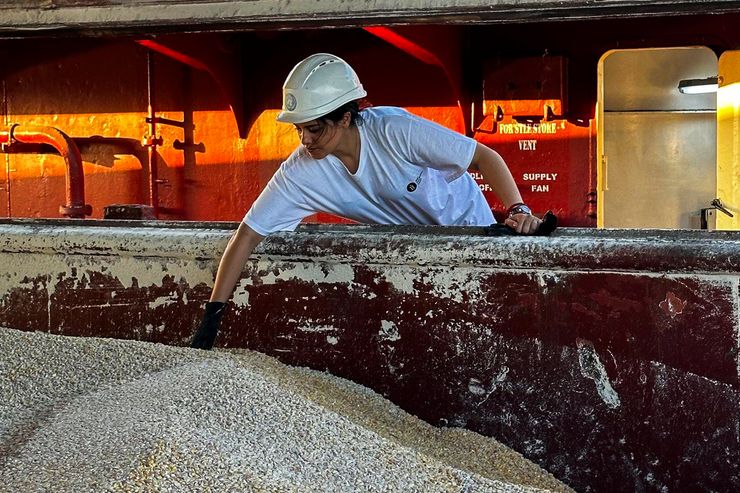
Russia has halted a breakthrough wartime deal that allows grain to flow from Ukraine to countries in Africa, the Middle East and Asia where hunger is a growing threat and high food prices have pushed people into poverty
LONDON (AP) — Russia on Monday halted a breakthrough wartime deal that allowed grain to flow from Ukraine to countries in Africa, the Middle East and Asia where hunger is a growing threat and
high food prices
have pushed more people into poverty.Kremlin spokesman Dmitry Peskov said
the Black Sea Grain Initiative
would be suspended until demands to get Russian food and fertilizer to the world are met.An attack Monday on a bridge
connecting the Crimean Peninsula to Russia was not a factor in the decision, he said.“When the part of the Black Sea deal related to Russia is implemented, Russia will immediately return to the implementation of the deal,” Peskov said.
Russian representatives at the operation center for the initiative were more definitive, calling the decision “a termination,” according to a note obtained by The Associated Press.
Russia has complained
that restrictions on shipping and insurance have hampered its agricultural exports, but it has shipped record amounts of wheat since last year.The suspension marks the end of an accord that the U.N. and Turkey brokered last summer to
allow shipments of food from the Black Sea region
after Russia's invasion of its neighborworsened a global food crisis
. The initiative is credited with helping reduce soaring prices of wheat, vegetable oil and other global food commodities.Ukraine and Russia are both
major global suppliers of wheat
, barley, sunflower oil and other food that developing nations rely on.The suspension of the deal sent wheat prices up about 3% in Chicago trading, to $6.81 a bushel, which is still about half what they were at last year's peak. Prices fell later in the day.
Some analysts don’t expect more than a temporary bump in food staples traded on global markets because countries such as Russia and Brazil have ratcheted up wheat and corn exports. But food insecurity worldwide and prices at local stores and markets have risen as developing countries also struggle with climate change, conflict and economic crises. Finding suppliers outside Ukraine that are farther away also could raise costs, analysts say.
The grain deal provided guarantees that
ships would not be attacked
entering and leaving Ukrainian ports, while a separate agreement facilitated the movement of Russian food and fertilizer. Western sanctions do not apply to Moscow’s agricultural shipments, but some companies may be wary of doing business with Russia.Ukrainian President Volodymyr Zelenskyy said he wanted to keep the initiative going even without Russia’s safety assurances for ships.
“We are not afraid,” he said, adding that shipping companies told him “everyone is ready to continue supplying grain” if Ukraine and Turkey were on board.
The Russian Foreign Ministry again declared the northwestern Black Sea area “temporarily dangerous.” Sergei Markov, a Moscow-based pro-Kremlin political analyst, speculated that if Ukraine doesn't heed the warnings, Russia could strike Ukrainian ports or place mines in shipping routes.
The Black Sea Grain Initiative has allowed
three Ukrainian ports to export
32.9 million metric tons of grain and other food to the world, according to the Joint Coordination Center in Istanbul.Russia has repeatedly complained that the deal largely benefits richer nations. JCC data shows that
57% of the grain from Ukraine went to developing nations
, with the top destination being China, which received nearly a quarter of the food.U.N. Secretary-General Antonio Guterres said the end of the deal will result in more human suffering but that the U.N. would keep working to ensure the flow of supplies from Ukraine and Russia.
“There is simply too much at stake in a hungry and hurting world,” Guteres told reporters.
Ukraine can still export by land or
river through Europe
, but those routes have a lower capacity and havestirred divisions among its neighbors
.In a post late Monday on his Telegram channel, Zelenskyy said he and Guterres agreed “to work together and with the responsible states" to restore food supplies via the Black Sea.
White House national security spokesman John Kirby blasted Moscow for pulling out of the deal and said the decision would “harm millions of vulnerable people around the world.”
Turkish President Recep Tayyip Erdogan
said officials were talking with Russia and that he hoped the deal would be extended.The agreement was
renewed for 60 days
in May, but the amount of grain and number of vessels departing Ukraine have plunged, with Russia accused ofpreventing new ships from participating
since June 27. The last ship left Ukraine on Sunday and was inspected Monday.The war in Ukraine sent
food commodity prices to record highs
last year and contributed to a global food crisis, which was also tied to other conflicts, the fallout from the pandemic and climate factors.High grain prices in countries like Egypt, Lebanon and Nigeria
exacerbated economic challenges
and helped push millions more people into poverty or food insecurity.Rising food prices affect people in developing countries disproportionately, because they spend more of their money on meals. Poorer nations that depend on
imported food priced in dollars
also are spending more as their currencies weaken and they are forced to import more because of climate change.Under the deal, prices for wheat and other commodities have fallen, but food was already expensive before the war in Ukraine, and
the relief hasn't trickled down
to kitchen tables.“Countries such as Sudan, Somalia, Ethiopia are dependent on food imports from Ukraine, so it does hamper availability and accessibility to food,” said Shashwat Saraf, the International Rescue Committee’s regional emergency director for East Africa.
Now, it’s key to watch whether Russia “weaponizes” its wheat exports, said Simon Evenett, professor of international trade and economic development at the University of St. Gallen in Switzerland.
As the world’s current largest wheat supplier, Russia could hike its export taxes, which “would raise world grain prices as well as allow Russia to finance more of its military campaign in Ukraine,” Evenett said. He noted that Moscow already raised them slightly this month.
The grain deal has faced setbacks since it was brokered.
Russia pulled out briefly in November
before rejoining and extending the deal.In March and May, Russia would only renew for two months, instead of the usual four. Joint inspections meant to ensure vessels carry only grain and not weapons have
slowed considerably
.The amount of grain shipped per month has fallen from a peak of 4.2 million metric tons in October to over 2 million metric tons in June.
Meanwhile, Russia’s wheat shipments hit all-time highs following a large harvest. The country exported 45.5 million metric tons in the 2022-2023 trade year, with another record of 47.5 million metric tons expected in 2023-2024, according to U.S. Department of Agriculture estimates.
___
Associated Press reporters Hanna Arhirova in Kyiv, Ukraine, Edith M. Lederer at the United Nations and Andrew Wilks in Istanbul contributed.
___
See AP’s complete coverage of the war in Ukraine at
https://apnews.com/hub/russia-ukraine
and the food crisis athttps://apnews.com/hub/food-crisis.